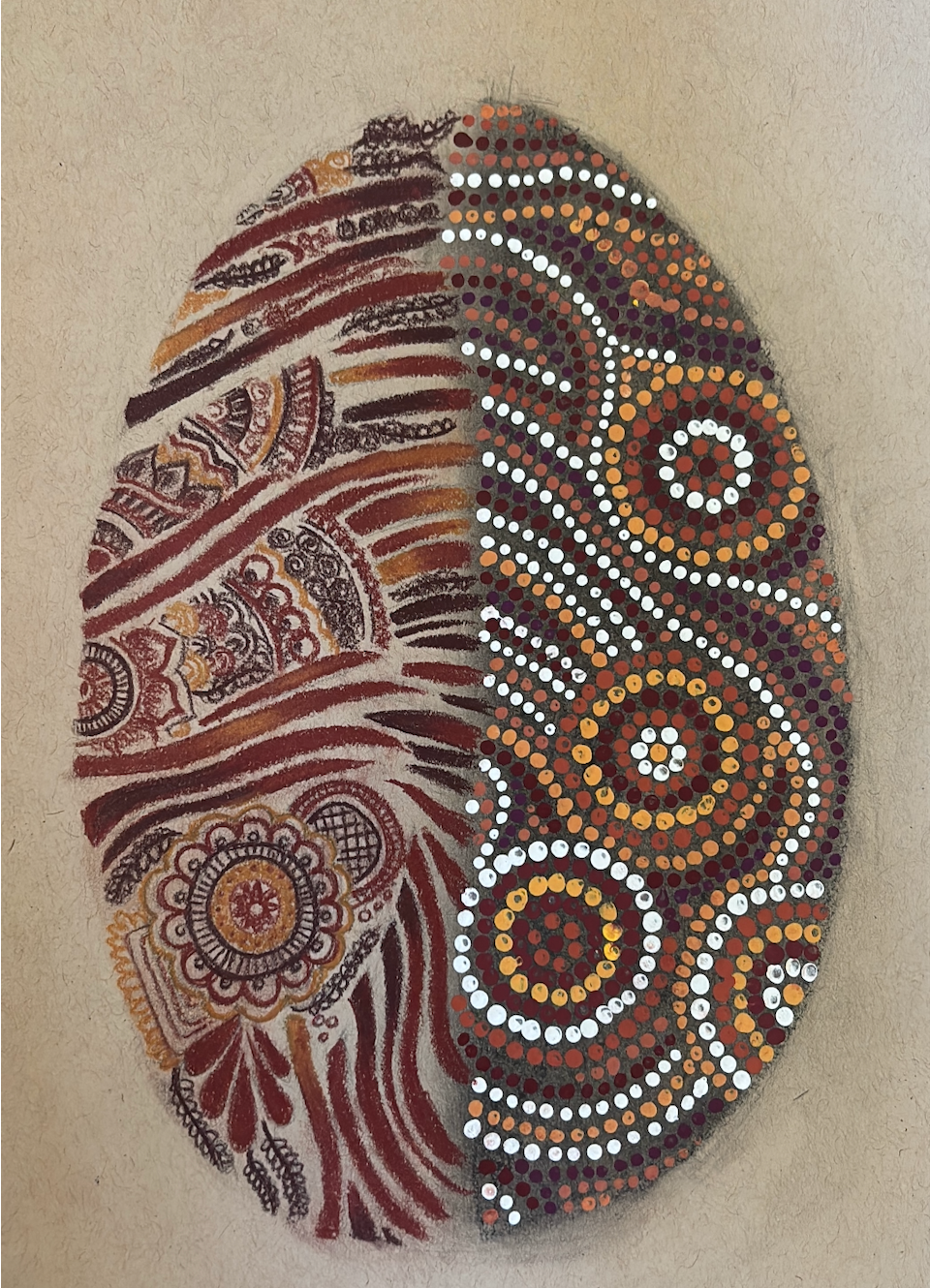
 In an era where identity is increasingly scrutinized, scanned, and cataloged, visual art remains one of our most powerful tools for exploring what it truly means to belong. The artwork above presents a striking visual metaphor: a fingerprint split down the middle, depicting two distinct traditional art styles woven into a single human mark.
On the right, we see the intricate, vibrant dot-painting technique characteristic of Indigenous Australian art—a tradition deeply rooted in Connection to Country, story, and ancestral heritage. On the left are rich, intricate patterns reminiscent of South Asian Mehndi (henna) and folk motifs, flowing through organic line work and traditional mandala forms.
Together, they form a thumbprint—the universal marker of human identity, legal existence, and personal history.
The Symbolism of the Split Thumbprint
A thumbprint is often viewed through two lenses:
- Biometric Data & Identity Control: In modern immigration and border control systems, a thumbprint is reduced to data—a security check, a visa requirement, or a marker of authorization.
- Personal Identity & Cultural Soul: In art and human experience, a thumbprint represents individuality, lineage, and the irreplaceable mark of an individual’s presence.
By splitting the thumbprint between two rich cultural art traditions, the piece highlights how immigrants carry multiple worlds within themselves. Identity is rarely monolithic; for diaspora communities, it is a fusion of heritage, history, and adapting to new lands.
Navigating Intolerance: The Immigrant Experience
Around the world—and notably in debate-heavy political climates like the United States—immigrants often find themselves caught between two realities. On one hand, there is the desire to contribute, integrate, and call a new nation home. On the other hand, rising intolerance and xenophobia often reduce complex human beings to mere statistics or targets of socio-political friction.
When immigrant intolerance flares up, it often manifests as a rejection of cultural complexity:
- The Pressure to Assimilate: Immigrants are frequently expected to erase their heritage in favor of a singular, dominant cultural mold.
- Reduction to “Otherness”: Cultural expressions, traditional garments, language, and art are sometimes viewed with suspicion rather than appreciated for the diversity they bring.
- The Struggle for Recognition: Just like a thumbprint waiting to be verified at a border checkpoint, immigrants are continually asked to prove their legitimacy, value, and right to belong.
Art as a Sanctuary and Counter-Narrative
Art like the piece shown here serves as a gentle yet profound counter-narrative to intolerance. It reminds us that:
- Multiculturalism is Harmony, Not Division: The two halves of the fingerprint do not clash; they complete the oval together. The earthy tones of ochre, terracotta, deep burgundy, and bright white bind both traditions into a cohesive whole.
- Heritage Cannot Be Erased: No matter where a person moves or what challenges they face in a new host country, their intrinsic heritage—encoded like a fingerprint—remains an irreplaceable part of who they are.
- Human Dignity Comes First: Before any visa status, passport, or political debate, every individual carries a unique human identity that deserves respect and dignity.
Moving Forward: Embracing the Full Impression
Addressing intolerance requires looking beyond fear and political rhetoric to see the actual human stories behind immigration. Just as the lines of a fingerprint tell a story of unique identity, every immigrant brings a unique rich tapestry of skills, culture, and resilience to the communities they join.
As we look at art that bridges cultures, we are invited to ask ourselves: How can we build communities that honor the full impression of a person’s identity, rather than demanding they erase half of who they are?
What are your thoughts on how art can foster better understanding across cultures? Share your reflections in the comments below!