 There is a unique magic in still life painting—a tradition that turns everyday objects into deliberate studies of light, form, and emotion. While traditional realism often aims for smooth, seamless blending, incorporating rich impasto and tactile texture breathes fresh, modern energy into classic compositions.
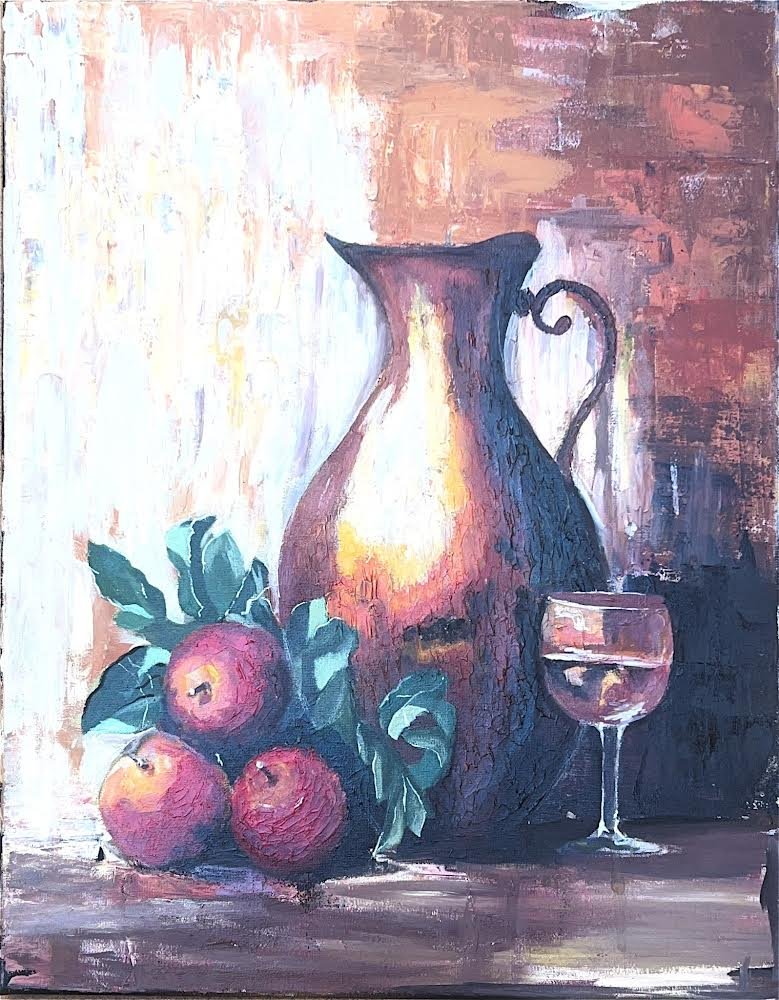
The piece featured here showcases how heavy paint application, palette knife work, and layered color bring a rustic, vibrant life to classic everyday elements: a bronze pitcher, ripe fruit, and a glass of wine.
1. Building Dimension with Palette Knife and Impasto
One of the defining features of textured still life artwork is the physical presence of the paint. Rather than applying thin, flat glazes, heavy-body acrylics or oils are applied thickly—often using palette knives alongside traditional brushes.
- Tactile Surfaces: Notice the crackled, metallic sheen on the ceramic pitcher. By layering deep umbers, terracottas, and striking yellow highlights, the surface gains a weathered, hand-crafted feel that catches ambient light.
- Sculpted Fruit: The red apples in the foreground aren’t just colored; they are sculpted. Thick impasto strokes follow the round contour of each fruit, giving them weight and three-dimensional presence against the cool green foliage.
2. The Play of Light, Shadow, and Contrast
Textured backgrounds do more than just fill space—they interact dynamically with the main subject matter.
- Scumbled Backgrounds: The backdrop transitions from soft, glowing cream tones on the left to deep, rustic brick tones on the right. This dry-brush scumbling creates movement without overwhelming the central subject.
- Glint and Transparency: The contrast between the heavy, earthy pitcher and the delicate glass of wine adds balance. Delicate white highlights on the rim and stem give the illusion of glass catching real-world light.
3. Key Tips for Creating Your Own Textured Still Life
If you are inspired to create a similar tactile painting in your studio, keep these technique tips in mind:
- Use Modeling Paste or Gel Mediums: Mix your paint with heavy gel mediums or modeling paste to hold sharp peak ridges and deep grooves without sagging as it dries.
- Layer Dark to Light: Block in your rich shadow tones first using darker pigments. Lay your brightest highlights—like the reflective warm tones on the pitcher—on top with a light, decisive sweep of a knife.
- Embrace Temperature Contrast: Pair warm focal elements (terracotta, copper, red fruit) with cool accents (deep teal leaves and muted gray-violet shadows) to make the composition pop.
Final Thoughts
Textured still life painting bridges the gap between classic subject matter and tactile modern art. By focusing on surface variation and bold paint application, simple objects transform into an immersive visual and physical experience.
Do you prefer smooth realism or expressive, textured palette knife work in still life art? Let us know your thoughts in the comments!